The origin of Japandi
The name Japandi is a fusion of Japanese and Scandi (Scandinavian), creating a hybrid style that combines the best of both worlds: the serene simplicity of Japan with the warm functionality of Scandinavia.
From Japanese culture comes the principle of wabi-sabi: the beauty of imperfection, the power of simplicity, and a deep connection to nature. From Scandinavia comes the idea of hygge: a feeling of coziness, comfort, and minimalism that radiates warmth.
Although these worlds are geographically apart, they share many similar values. Both cultures value tranquility, craftsmanship, and mindful living. In interior design, this translates into natural materials, subdued colors, thoughtful shapes, and intentional use of space.
Japandi isn’t about what you add, but what you leave out. Empty space is not an absence; it’s an invitation to calm, balance, and meaning.
The essence of Japandi in your interior
A Japandi interior is refined and understated. It avoids excessive decoration and bright colors, focusing instead on a calm foundation where every piece of furniture and accessory is carefully chosen. The result is an atmosphere of tranquility that invites relaxation.
Characteristics of Japandi style:
- Natural materials such as bamboo, wood, ceramic, and linen
- Earthy, neutral color palette: sand, taupe, gray, beige, and black
- Low furniture with clean lines and soft forms
- Plenty of light and air, without visual clutter
- Subtle details: a handmade vase, a stone bowl, a branch in a simple vase
Japandi style in every room
The power of Japandi lies in its simplicity. Whether you want to create a minimalist kitchen, a peaceful bedroom, or a warm, clutter-free living room, the principles of this style adapt effortlessly to every space in your home. Natural materials, muted colors, and thoughtful layouts bring balance — both visually and mentally. Japandi introduces tranquility exactly where you need it: in the places where you live, work, and relax. Below, discover how this style comes to life in the kitchen, living room, and bedroom.
The Japandi bedroom
The essence of Japandi shines brightest in the bedroom: a space to let go, unwind, and recharge. The color palette is calm and warm, built from shades like sand, soft gray, and natural wood tones. The bed is low and sturdy, dressed with airy linen sheets and a woolen throw in natural hues. Nightstands are simple and functional, with decoration kept to a minimum. A single vase, a paper lantern, or a framed graphic piece is enough. Lighting is soft and indirect, designed to soothe the mind and body. Emptiness plays a leading role here — not as a lack, but as space to breathe. This is the room where your day begins and ends peacefully.
The Japandi kitchen
Calm takes center stage in a Japandi kitchen. You won’t find clutter or loud colors here, but a serene foundation where everything feels right. The kitchen is often open and minimalist, with clean lines and a clear palette of sand, wood, and soft gray. Cabinets are flat and handle-free; materials are natural and tactile: brushed wood, matte ceramics, light bamboo, or dark natural stone. Countertops are tidy, cupboards offer hidden storage, and accessories are limited to a few carefully chosen items like a handmade teapot or a wooden board with ceramic bowls. Lighting is functional yet atmospheric, with warm under-cabinet lights and a simple pendant over a solid wood dining table. The Japandi kitchen is not only beautiful but also a space for mindful cooking and living.
The Japandi living room
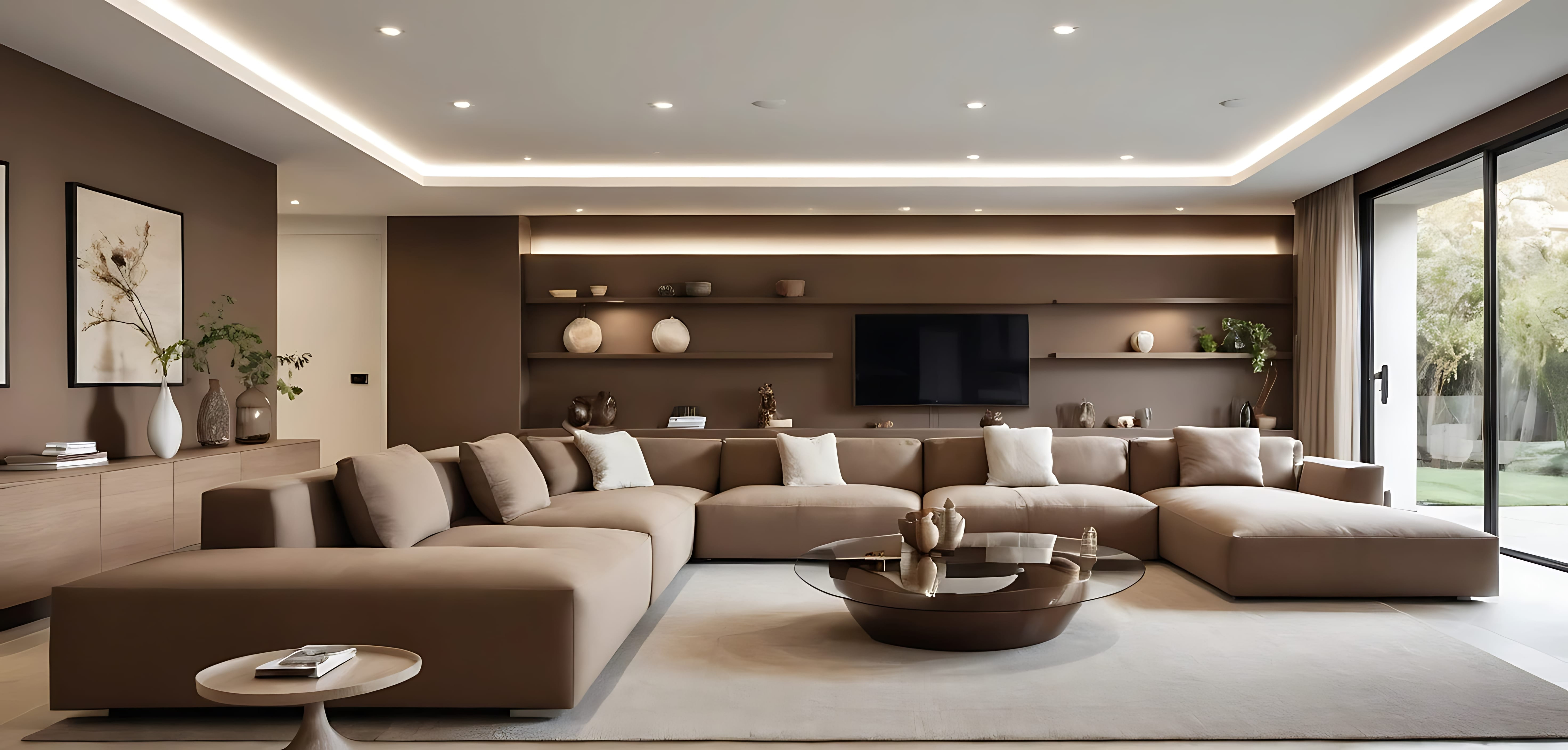
A Japandi living room is an oasis of tranquility. This is home, in every sense. The space feels light, open, and uncluttered. Furniture is low-profile, simple in shape, and made from natural materials like wood, linen, and wool. Think of a warm beige sofa, a low oak coffee table, and a soft textured rug. The color scheme is restrained: mostly earthy tones with black accents for depth. Decoration is minimal and meaningful: a bonsai on a shelf, a vase with a single branch, or a carefully selected artwork on the wall. What stands out is the peaceful composition of symmetry, repetition, and plenty of breathing room. The Japandi living room invites you to slow down, put your phone aside, grab a book, or simply be still.
The Japandi bathroom
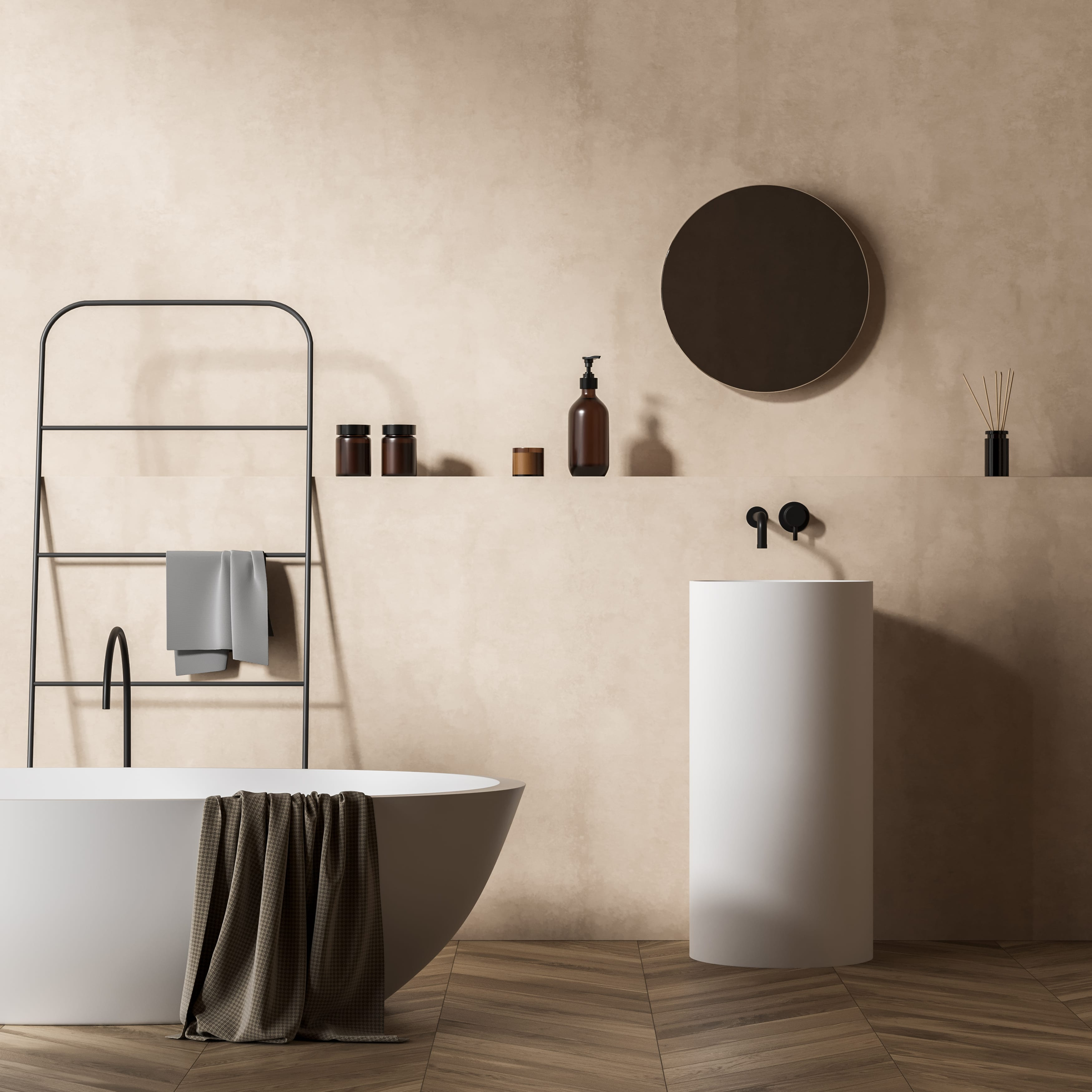
The Japandi bathroom is a serene retreat where minimalist design meets natural materials. Soft tones, wood, ceramic and stone create a calm and balanced atmosphere. Subtle touches like a wooden stool, a linen towel or a single branch in a simple vase add warmth and harmony. It is a space to slow down, recharge and mindfully enjoy stillness and comfort.
The Japandi garden
The tranquility of Japandi doesn’t end at the front door. It flows seamlessly into the outdoors. A Japandi garden embodies simplicity, nature, and balance. Picture a clean, open layout with space to breathe, where every plant, stone, and seating area is placed with intention. Materials are natural and earthy: bamboo, wood, gravel, ceramic, and stone. Plants are minimal and thoughtful: ornamental grasses, moss, bonsai, or a single flowering shrub create a subtle, zen-like atmosphere. A wooden bench or low lounge chair in muted tones invites quiet reflection, a cup of tea, or simply a moment of stillness. Water often plays a gentle role, perhaps in a small pond or fountain, symbolizing flow and life. Just like indoors, the focus isn’t on abundance but on harmony. A Japandi garden is a space where the noise of the day melts away, reconnecting you with nature and with yourself.
Simple tips for a Japandi interior
Japandi style encourages you to slow down, live mindfully, and cherish space, silence, and simplicity. It asks the question: “What do I really need?” and the answer translates into tranquility within your home.
Ready to embrace Japandi? Start with the basics:
- Choose a neutral color palette as your foundation
- Mix smooth and rough textures for depth and contrast
- Invest in timeless furniture that’s durable and not tied to trends
- Create smart storage solutions to keep surfaces clear
- Let in natural light and use soft, ambient lighting