What is Wabi Sabi?
Wabi Sabi originates from Japanese Zen Buddhism. ‘Wabi’ stands for simplicity, tranquility, and finding beauty in modesty. ‘Sabi’ reflects the marks of time, the passage of life, and the charm of decay. Together, these principles create an aesthetic far removed from sleek design or lavish luxury — instead focusing on character, texture, and the honest story of materials.
In interior design, Wabi Sabi translates into a calm atmosphere where materials breathe, colors soften, and objects tell their own stories. No excess, no ornamentation. Just serenity through authenticity.
Wabi Sabi in your home
A Wabi Sabi interior radiates calm and warmth. It’s understated but never cold. Every element in the space contributes to a sense of balance. Not through perfection, but through asymmetry, texture, and lived-in details.
The life lessons of Wabi Sabi, translated into your home:
- Natural, raw materials like rough wood, clay, linen, stone, and concrete
- Soft, matte tones: sand, grey, moss green, terracotta, and off-white
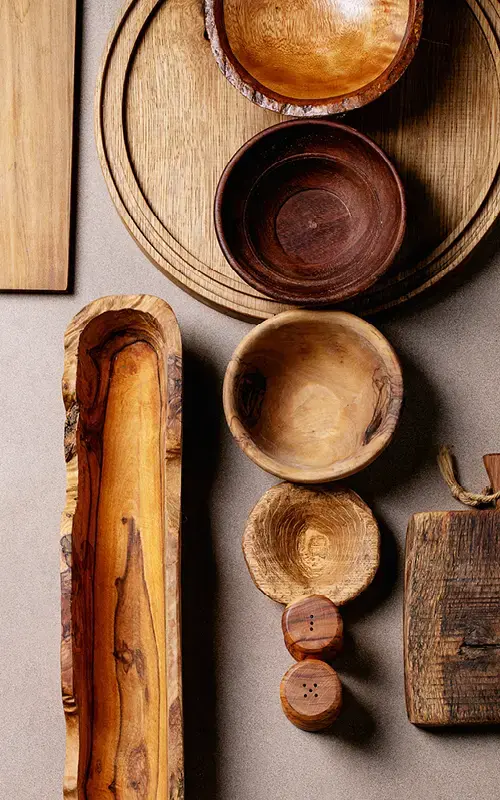
- Handmade objects with visible imperfections or patina
- A restrained, harmonious layout with plenty of breathing room
- Modest accessories: a weathered vase, a single branch, a stone bowl
- Layered lighting with a warm glow
Wabi Sabi in every room
The power of Wabi Sabi lies in simplicity, making it easy to apply in any room. Whether you want to relax in your living room, unwind in your kitchen, or create a sanctuary in your bedroom, Wabi Sabi brings peace and depth with minimal means.
The Wabi Sabi bedroom
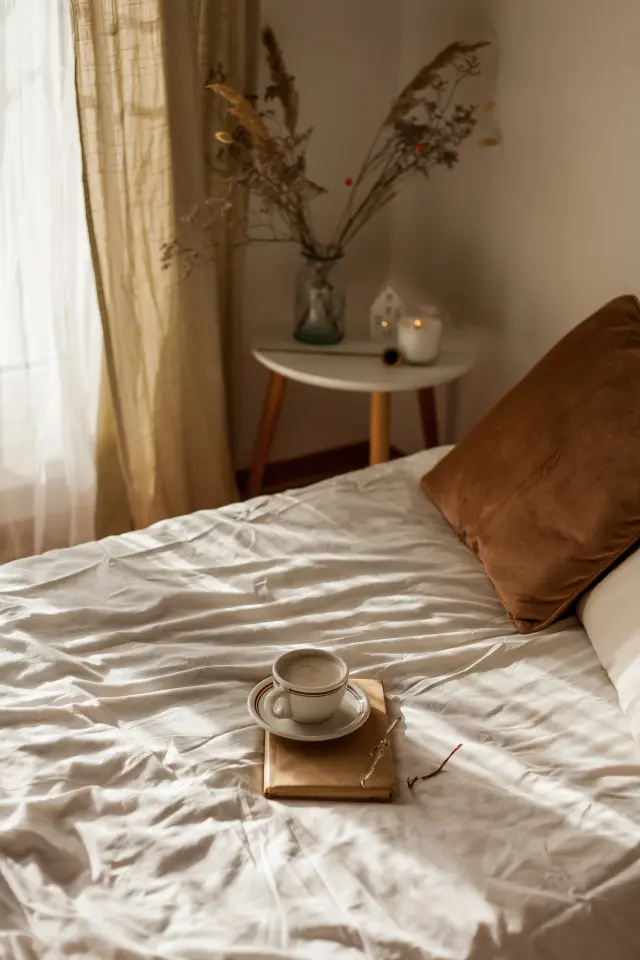
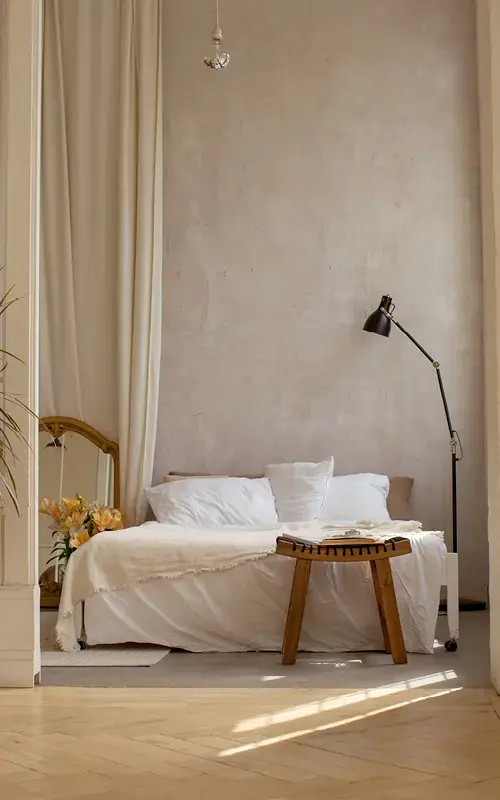
This philosophy comes to life in the bedroom: a space to let go, relax, and recharge. Picture a low, rustic wooden bed frame, soft washed linen bedding in natural hues, and minimal distractions.
Decor remains subtle: a ceramic bowl on the nightstand, a worn stool as a side table, linen curtains filtering soft light. It’s a place for rest, surrender, and harmony.
The Wabi Sabi kitchen
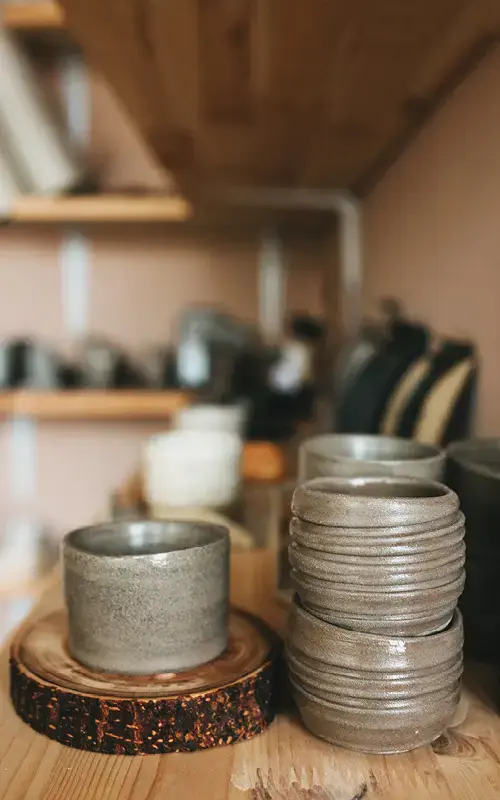
A Wabi Sabi kitchen is functional, earthy, and timeless. Think open shelves of solid wood, irregular-shaped ceramics, and worn-looking countertops.
Materials are tactile: natural stone, baked tiles, glazed pottery. Accessories are limited but meaningful: a wooden cutting board with use marks, a simple teapot, a bowl of freshly picked fruit.
Lighting is warm and focused: a soft pendant over the dining table, a wall lamp casting gentle shadows. This kitchen invites mindful cooking and living.
The Wabi Sabi living room
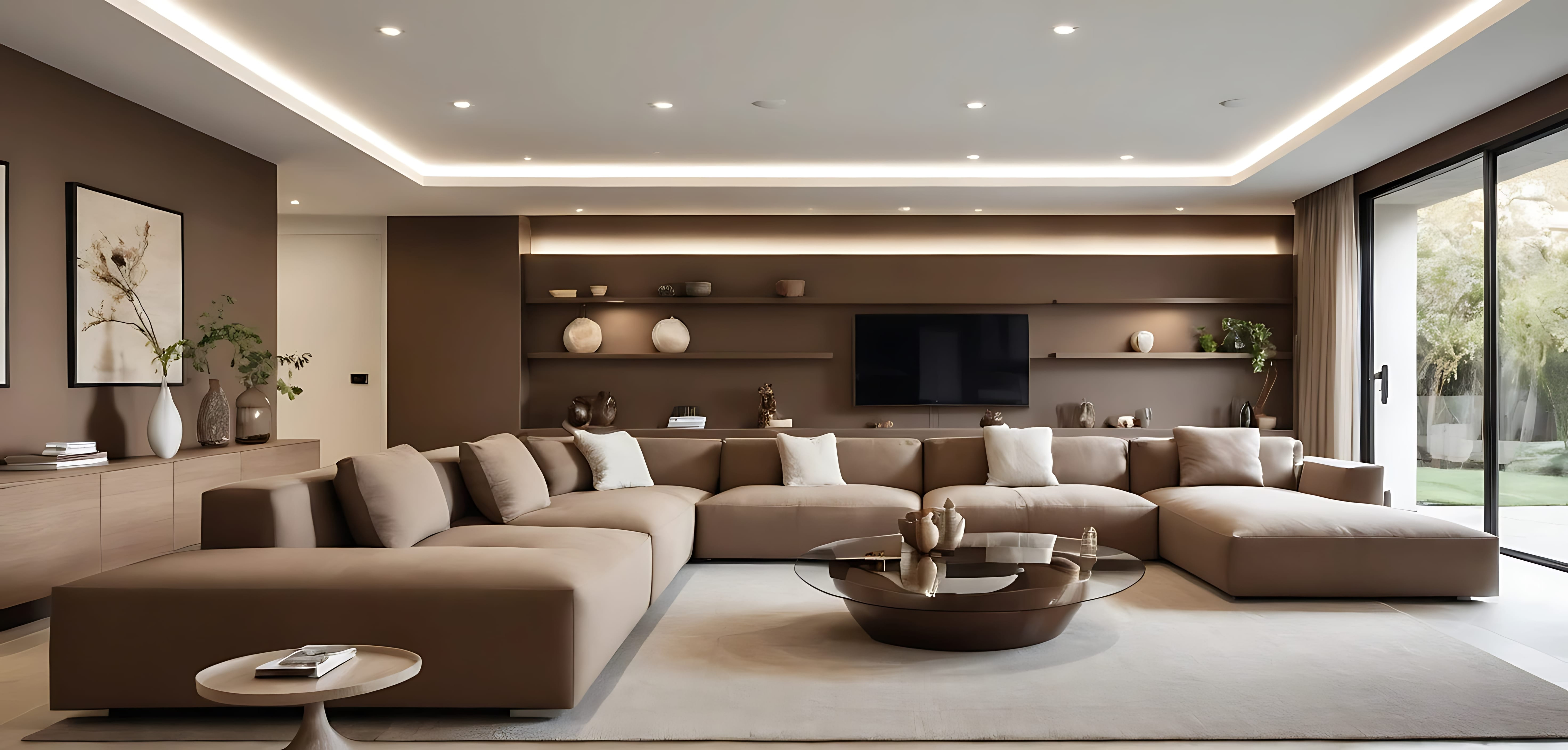
A Wabi Sabi living room is a place to just be. Not to impress, but to unwind. Imagine a linen-covered sofa, a low coffee table made of weathered wood, a ceramic vase holding a single branch.
The color palette is muted, furniture simple, accessories sparse yet personal. A worn wall may be left bare, an imperfect painting might become the focal point.
This room feels like a pause button in your home. A place to reconnect with yourself where silence is not emptiness, but a luxury.
The Wabi Sabi bathroom
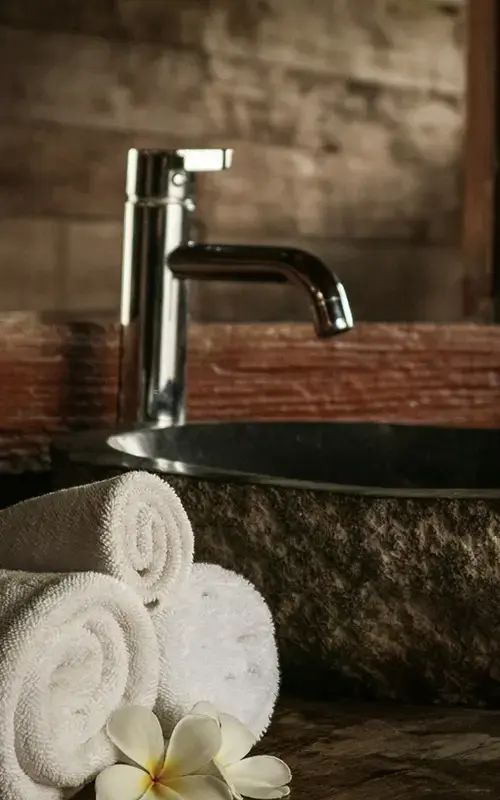
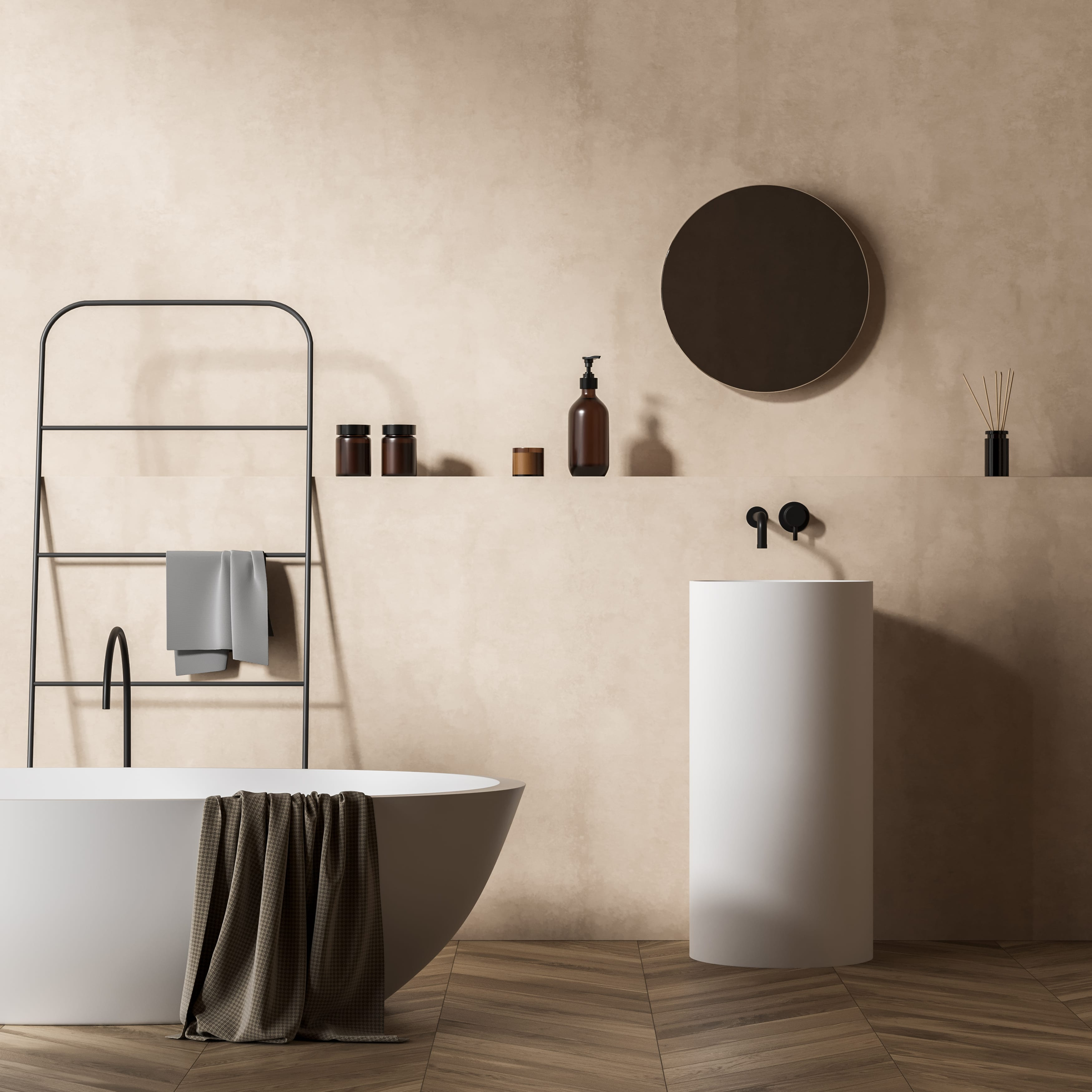
The Wabi Sabi bathroom embraces simplicity. Natural materials like wood, clay and stone create a lived-in, tranquil atmosphere. The colors are soft, ranging from sandy tones to muted greens. No excess, just thoughtful touches like a handmade bowl or a linen cloth to add character. It is a space to slow down and retreat.
The Wabi Sabi garden
The Wabi Sabi garden is a quiet, natural space where imperfection and impermanence are embraced. Think moss, bamboo, weathered wood and stone, with plants that grow freely and materials that reflect the passage of time. Furniture and accessories are simple and functional, with a handmade pot or a shallow bowl of water as a subtle focal point. It is a place of tranquility, where simplicity and stillness take center stage.
5 Tips for a Wabi Sabi interior
Wabi Sabi invites you to slow down and accept imperfection. It’s not about a perfect house but a thoughtfully curated home. Ready to bring this style into your life? Start here:
- Choose natural materials with texture: wood, linen, clay, stone
- Use a muted color palette with soft earth tones
- Embrace imperfection by seeking handmade or vintage items
- Avoid overdecorating and choose meaningful objects
- Work with soft, indirect lighting for a calm ambiance